
[Free Report] The 11-Hour Options Guide for Beginners - trade and ticker included (From Base Camp Trading)
Key Points
- Tesla's stock has dropped 30% in less than a month after an earnings report showed record revenue alongside collapsing operating margins and negative free cash flow.
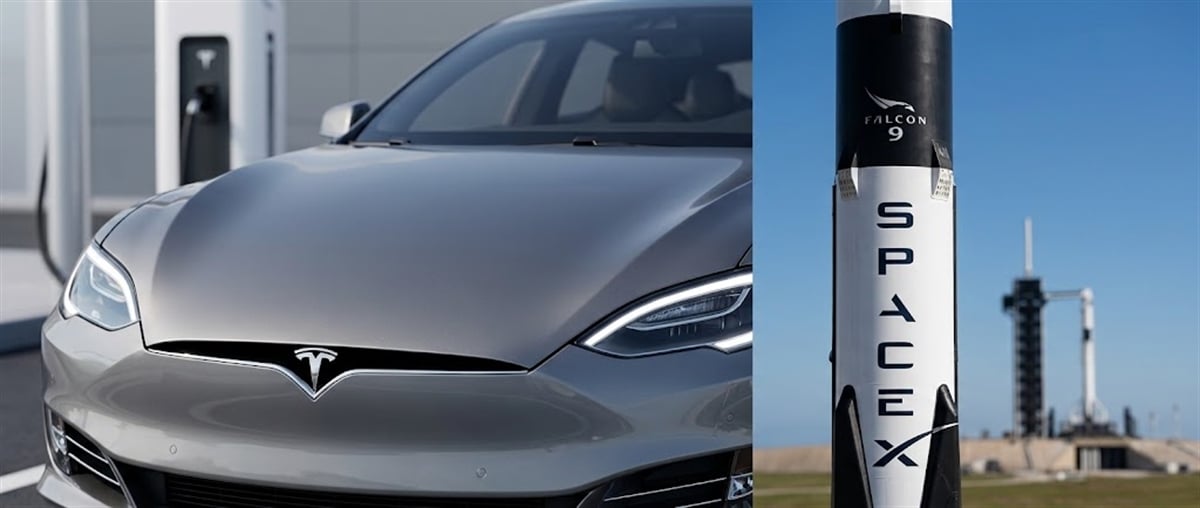
- Speculation about a potential Tesla-SpaceX merger has intensified after Musk acknowledged overlapping ambitions, though he stopped short of confirming any formal discussions.
- Bulls point to a possible merger as a major upside catalyst, but SpaceX's own falling valuation and cash burn make that thesis speculative and fragile for now.
- Special Report: ALERT: Drop these 5 stocks before the market opens tomorrow! (From Weiss Ratings)
After a 30% drop in less than a month, it’s fair to say that Wall Street is more divided on Tesla Inc. (NASDAQ: TSLA) than it has been in years. The company's latest earnings report, released last week, delivered a jarring split between record headline revenue and a sharp deterioration in profitability, and the market has been trying to make sense of it in the days since.
Out of that confusion, two starkly different visions of Tesla's future have emerged. One camp sees a core business whose margins are collapsing under the weight of enormous artificial intelligence spending, and is heading for the exit.
The other can look beyond the quarter and toward a potential merger with SpaceX (NASDAQ: SPCX) that could reshape the entire company.
Which of these two paths the stock ultimately follows may matter far more than any single line in the earnings report.
75,000+ Waiting for This Product. Shares Available at $0.79 Until 11:59pm (Ad)
AI dominates nearly every conversation right now. But the next big opportunity may not be AI itself, but rather the devices people use to access it every day.
More than 1.5M professionals already use this company's platform to work from anywhere. Building on its software platform, the company developed Visor, a lightweight headset designed for work. It is 70% lighter than Apple Vision Pro and costs about one-third as much.
Instead of offering just software or just hardware, Immersed combines both with a built-in AI assistant designed to enhance productivity. Shares are currently available at $0.79 through the company's Regulation A+ offering, but that changes soon.
Lock in the $0.79 share price before the round closes tonight!
Path #1: A Core Business That’s Under Severe Pressure
The bearish case is grounded in what the numbers actually showed. Yes, headline revenue grew strongly year-over-year, but operating margin collapsed more than 60% from where it was a year earlier while free cash flow turned negative. Earnings per share missed expectations as capital spending surged.
Dig beneath the headline numbers, and the picture looks starker still. A large chunk of Tesla's reported net income came from a one-off gain on its stake in SpaceX rather than from selling cars or storing energy. Strip that out, along with fading regulatory credit income, and the underlying profitability shrinks dramatically. For a company still valued as one of the most expensive mega-cap stocks in the market, that’s an uncomfortable place to be.
The bigger concern is that the spending shows no sign of slowing. Tesla's capital expenditure plans have ballooned to enormous levels, funding everything from its Optimus robots and Cybercabs to new factories and fresh AI initiatives. None of these have a clear near-term path to profitability, however, making Tesla, in the eyes of the bears, a stock best left alone.
Path #2: The SpaceX Card
The bulls, meanwhile, are focused on something else entirely. On the earnings call, CEO Elon Musk acknowledged the growing overlap between Tesla and SpaceX, particularly around their shared chip ambitions. However, he was careful not to confirm any formal merger discussions.
Given there had already been plenty of talk around the possibility of a merger, his comments were enough to send speculation into overdrive, with Deepwater Asset Management's Gene Munster raising the odds of an eventual merger combination to 90%.
The vision behind a deal is undeniably ambitious. Proponents describe a business that would knit together SpaceX's satellite connectivity, Tesla's real-world AI, and orbital computing into a single vertically integrated AI ecosystem.
RBC Capital Markets analyst Tom Narayan has gone as far as to model specific deal terms, arguing that a combination at a hypothetical $480 per Tesla share, a premium of more than 60% to the current price, would leave existing shareholders owning more than half of a combined entity worth trillions.
If that vision were to come to pass, then the margin questions hanging over Tesla’s car business today would end up looking like a footnote.
Buy this stock tomorrow (Ad)
Marc Chaikin, founder of Chaikin Analytics, is sharing a strategy he calls 'Sell This, Buy That' - a way to move out of overpriced AI stocks before the tech trade breaks down and into lesser-known names with real potential to challenge the Mag 7.
One pick he calls 'an upgrade to Tesla stock' is a little-known company that just inked a partnership with Nvidia, positioning it ahead of Tesla in the autonomous vehicle race.
Get the name, ticker, and full Hotlist before markets open
Why the Merger Thesis Is Still Fragile
There is a significant catch, however. Far from being a rock-solid backstop, SpaceX's own valuation has been anything but stable. Its shares have fallen by around 40% from their June peak, as its pre-IPO hype evaporates and the company suffers from the same AI spending fears that have been hitting tech valuations.
There is also the simple fact that a future combination would merge two intensely capital-hungry businesses rather than pairing a cash generator with a growth project. SpaceX may boast stronger margins than Tesla in places, but it remains deeply unprofitable and is burning through cash on its own huge investment cycle. Far from being an antidote to Tesla’s woes, it could be a poisoned chalice.
Which Path Is Tesla On?
Based on the stock’s recent price action at least, it’s hard not to feel that Tesla’s near-term path belongs firmly to the first camp. The dramatic margin compression, the negative free cash flow, and the enormous spending plans are already reported facts, sitting in black and white in the latest earnings report.
The SpaceX merger, by contrast, remains speculative, with no formal process announced and Musk's own comments carefully hedged. For now, the SpaceX play should best be treated as a potential upside catalyst layered on top of a Tesla comeback story that has yet to materialize.
Featured Stories
- Can Starbucks Keep This Turnaround Going? The Latest Results Say Yes
- Not oil. Not solar. Bigger. (From Behind the Markets)
- Why NXP Semiconductors Could Be the AI Stock Everyone Is Missing
- This tiny launch company operates next to SpaceX and Blue Origin (From Freedom Financial)
- Powering Up: NextEra and Brookfield Build an Off-Grid Empire
- DoorDash's Drone Certification Could Reshape Its Delivery Margins
- 2 Unique Space ETFs That Could Upend the Industry

Stay Ahead of the Market
The best investment opportunities don't wait. Get our research and stock ideas delivered straight to your smartphone—so you never miss a market-moving opportunity. Our text alerts ensure you see timely stock ideas and professional research reports instantly, whether you're in a meeting, commuting, or away from your desk.
