
The $15 Gold Fund That Pays Up to $1,152/Month (From Investors Alley)
Key Points
- Microsoft secured a 20-year power agreement with Chevron to support a 2.67-gigawatt AI infrastructure project in Texas.
- The deal addresses one of the biggest constraints facing AI growth: access to reliable, large-scale electricity.
- Long-term energy cost visibility could strengthen Azure margins and reinforce Microsoft’s AI leadership position.
- Special Report: Run this before every trade (free today) (From Profits Run)
Microsoft (NASDAQ: MSFT) investors just got an answer to the question hanging over the artificial intelligence (AI) infrastructure trade. Where does the power come from?
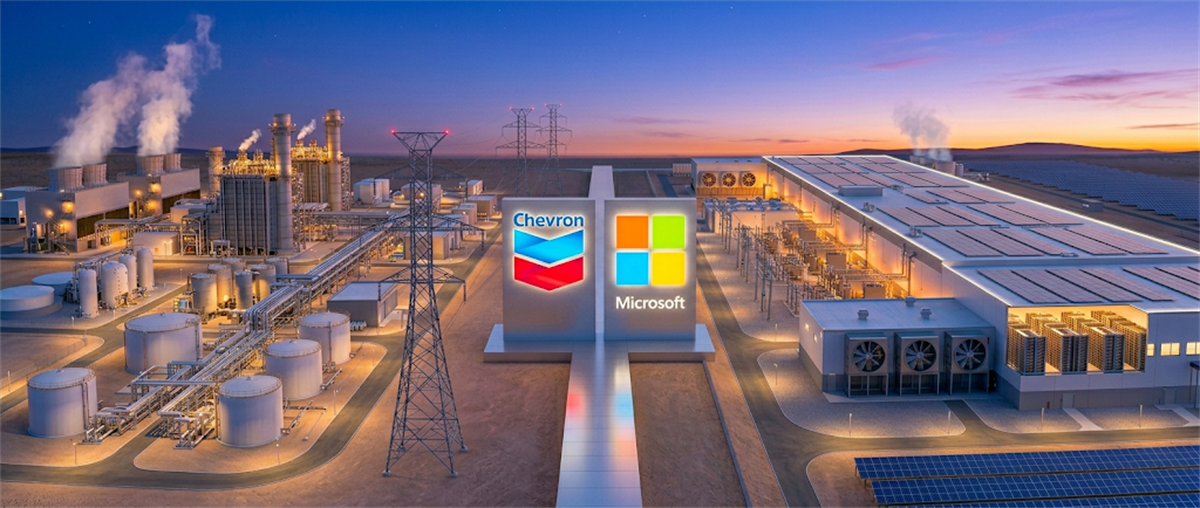
On June 22, Chevron (NYSE: CVX) and Microsoft signed a 20-year power purchase agreement. The deal funds Project Kilby, a 2.67-gigawatt natural gas plant in West Texas. The total cost for the campus is estimated at roughly $7 billion. Initial power is targeted for 2028.
For Microsoft shareholders, this is the most consequential MSFT stock development since the OpenAI partnership. That may sound like hyperbole, but investors who have been paying attention to the issues surrounding the buildout of data centers will find the benefits from this deal hard to understate.
Goldman Sachs: 300 million jobs will disappear (Ad)
Goldman Sachs predicts 300 million jobs will disappear - and Elon Musk's 'Project Apex' AI supercomputer is accelerating the timeline. A Nobel Prize-winning scientist says what Musk is building could have a greater impact than the internet.
Louis Navellier, who flagged Nvidia before its 82,000% run, has identified one company at the center of this buildout. It's 49 times smaller than Tesla and already powers Microsoft, Meta, Amazon, and Google - and he's sharing the name and ticker in a free briefing.
Get the name and ticker of Navellier's top AI pick now
The Real AI Bottleneck Is Power Availability
Wall Street spent two years obsessing over NVIDIA (NASDAQ: NVDA) chip allocation. The smarter constraint to watch was always the grid.
AI data centers need uninterrupted, dispatchable electricity at scale. Utility interconnect queues now stretch three to seven years. That timeline is incompatible with how fast Microsoft needs to deploy Azure AI capacity.
Project Kilby fixes that. Instead of waiting in line, Microsoft is building its own line.
The plant is co-located with the data center. There is no transmission build-out and no grid wait. At 2.67 gigawatts, the facility could power more than 530,000 Texas homes.
Why Microsoft Chose Natural Gas Over Nuclear
Hyperscaler power strategies are diverging fast. The contrasts matter for MSFT shareholders.
Meta Platforms (NASDAQ: META) signed nuclear deals targeting up to 6.6 gigawatts by 2035. Most of those megawatts depend on small modular reactors. However, those reactors don’t yet exist at a commercial scale.
Amazon (NASDAQ: AMZN) signed an $18 billion, 17-year nuclear PPA with Talen Energy (NASDAQ: TLN). However, full 1.92-gigawatt delivery won’t happen until 2032 and still faces regulatory hurdles. Nuclear energy is coming soon, but not today.
Microsoft chose natural gas that will come from the Permian Basin. The technology is proven, and the project comes with a firm timeline and domestic supply chain.
Buy the “unseen winner of the AI race” before July 22 (Ad)
Marc Chaikin - the analyst who called Nvidia before a 45,000% surge - says one overlooked AI stock could split into three separate companies in a rare event called a 'starburst' before July 22.
Investors who buy shares before the announcement could automatically receive equal shares in each spinoff. A similar starburst at GE unlocked $184 billion for shareholders across three new companies.
Get the full details on this AI starburst opportunity before July 22
How Project Kilby Strengthens Azure Economics
Energy is the single largest operating cost for AI compute. A 20-year fixed PPA cuts tail risk on Azure AI gross margins. With this deal, Microsoft locks in price exposure through 2048. That kind of cost certainty is rare in a hyper-competitive cloud market.
For investors modeling long-dated free cash flow, this matters because it makes it more likely that Microsoft will generate a return on invested capital. It also gives Microsoft a margin advantage that competitors will struggle to match.
Microsoft is guiding to roughly $190 billion in fiscal 2026 capital expenditure (CapEx). Critics worry the spend is outrunning monetization. The Chevron deal pushes back on that narrative. Microsoft is not just buying GPUs. It is locking in the inputs that those GPUs need to run.
That’s a disciplined infrastructure build. The market has historically rewarded companies that take that approach with expanding multiples.
The deal also signals Microsoft will partner with Big Oil for execution speed. Sustainability purists may object. Enterprise customers focused on uptime will not.
Stocks That Benefit From Microsoft’s Power Buildout
This deal has clear collateral winners that MSFT investors should track:
GE Vernova (NYSE: GEV) provides the majority of the turbines.
Caterpillar (NYSE: CAT) supplies additional capacity through its Solar Turbines subsidiary.
Texas Pacific Land (NYSE: TPL) contributed surface acreage and exclusive water rights.
Chevron itself gets a 20-year contracted revenue stream that diversifies away from oil price beta. The Permian natural gas demand thesis just got a long-dated anchor customer.
Key Risks Investors Should Watch
The deal is not yet closed. Chevron's Final Investment Decision is expected by the end of 2026. Construction risk, permitting delays, and Permian gas pricing all remain live.
The first power is two years out. Microsoft still needs interim solutions through 2028. Azure AI demand must also materialize at the rate management is forecasting.
Sustainability-focused investors may downgrade Microsoft's ESG profile. Natural gas emissions are a step backward from prior clean-energy commitments.
Finally, the AI CapEx cycle itself could cool before Project Kilby goes live. A demand pullback in 2027 would leave Microsoft holding contracted megawatts it does not need.
Securing the Foundation of AI Growth
The bull case for Microsoft has rested on two pillars. Azure AI revenue growth and disciplined infrastructure execution.
This deal materially strengthens the second pillar. It also signals to the Street that Microsoft has identified the real bottleneck and has come up with a practical solution.
Competitors are betting on nuclear timelines that may slip. Microsoft is betting on gas turbines that ship on schedule. In a race measured in quarters, that’s the right trade.
For MSFT investors with a multi-year horizon, Project Kilby is the kind of unglamorous infrastructure decision that compounds. The headlines will move on by next week. The 2.67 gigawatts will be running for the next two decades.
Featured Stories
- Domino's Stock Slides to 52-Week Low as Investors Digest CEO Change
- Your name isn't on our protected list yet (From American Alternative)
- Getty Images’ OpenAI Deal Gives the Stock a New AI Licensing Story
- Print this and keep it by your screen (From Profits Run)
- Cerebras Systems, Inc: The Next Rags-to-Riches AI Story?
- Micron’s HBM Surge Could Redefine the AI Growth Story
- Qualcomm’s $4B AI Deal Takes Aim at NVIDIA’s Software Moat
Stay Ahead of the Market
The best investment opportunities don't wait. Get our research and stock ideas delivered straight to your smartphone—so you never miss a market-moving opportunity. Our text alerts ensure you see timely stock ideas and professional research reports instantly, whether you're in a meeting, commuting, or away from your desk.
