|
The obstacles are growing. Across the U.S. and Europe, communities and regulators are pushing back on new data centers over grid strain, water use, environmental impact and land permitting. Every delay raises costs.
Meanwhile, low-cost open-source AI models, many from China, keep getting better. In January 2025, the release of China's DeepSeek model erased about $589 billion of Nvidia's market value in a single day. If cheaper alternatives keep coming, AI could become a commodity before it becomes a profit engine.
Gold requires no earnings forecasts, no data centers and no technology adoption assumptions.
History shows that transformative technologies often go through a boom, then a correction as markets reassess. The internet changed the world, but the Nasdaq still fell 78% from its 2000 peak before bottoming in 2002. That doesn't mean AI will fail. It means excessive optimism can create painful volatility when expectations become hard to meet.
For centuries, gold has served as a store of value during periods of uncertainty, and it has historically offered diversification when investors look beyond stocks. Nobody can tell you when, or whether, the AI trade cools off, and you should be wary of anyone who claims they can. What you can do is understand your exposure. If your IRA, 401(k), TSP or 403(b) is concentrated in stock funds riding the AI boom, your retirement depends on that bet paying off.
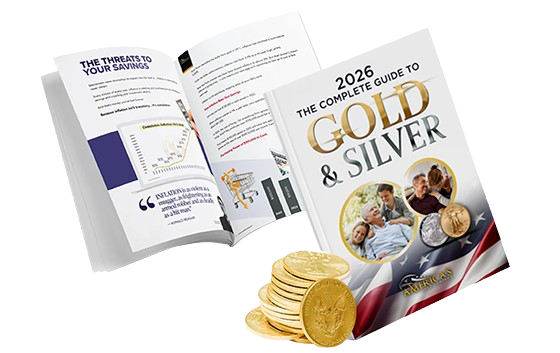
The free Precious Metals Retirement Guide covers:
✔ Why a growing share of the average retirement account may be riding on a handful of tech stocks.
✔ How physical gold and silver have behaved during past market corrections, including the dot-com crash.
✔ How you may be eligible to move a portion of an existing retirement account into physical metals, generally without a taxable distribution when structured correctly.
GET THE FREE GUIDE
Or call 1-888-691-8238 to speak with a precious metals specialist.
|
