
These AI stocks could go to zero. Here's why. (From InvestorPlace)
Key Points
- Kevin Warsh’s Fed policy may shift the 2026 interest rate outlook, driving different outcomes across bank stocks.
- JPMorgan and Goldman Sachs appear positioned to benefit from volatility and diversified revenue streams.
- Bank of America and regional banks offer higher upside but carry greater risk tied to rate cuts.
- Special Report: NOT buy any SpaceX IPO shares until you read THIS (From Weiss Ratings)
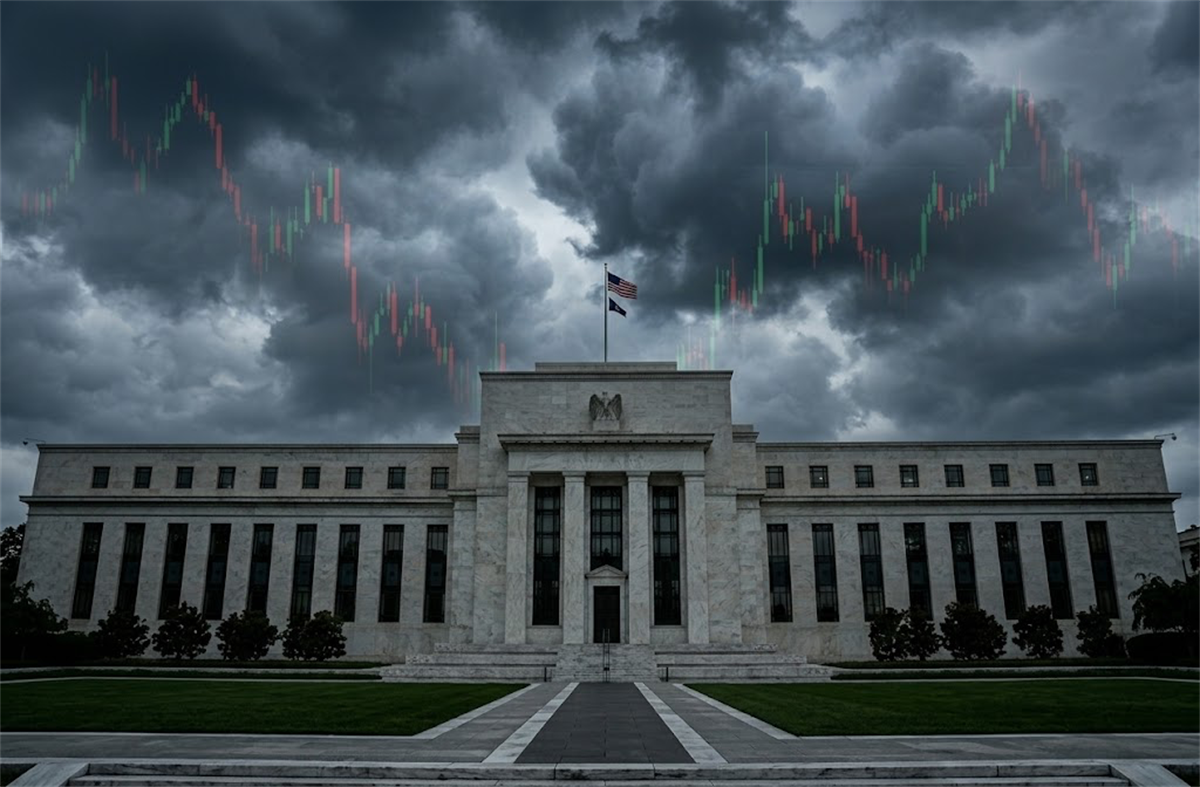
In June 2026, Kevin Warsh will take over as Chair of the Federal Reserve Board. Current Fed chair Jerome Powell’s term ends on May 15, and the U.S. Senate is expected to confirm Warsh sometime that week.
Warsh has stated an intention to change the way the Fed operates. But the first order of business, as far as investors are concerned, is to provide action, or at least clear guidance, on the direction of interest rates in 2026.
To many investors, this is just idle chatter. But it has significant impacts not only on many consumers but also on some companies that need lower rates to shore up their loan portfolios.
Ticker Revealed: Pre-IPO Access to "Next Elon Musk" Company (Ad)
We’ve found The Next Elon Musk… and what we believe to be the next Tesla.
It’s already racked up $26 billion in government contracts.
Peter Thiel just bet $1 Billion on it.
👉 Unlock the ticker now and get it completely free.
More Greenspan Than Volcker
Warsh previously served on the Fed board and was known for being an inflation hawk. That has some analysts believing that Warsh will follow the lead of former Fed chair Paul Volcker in the 1970s, putting a rate hike in play.
But past performance is no guarantee of future results. Warsh’s comments at his confirmation hearing leaned toward price stability over the Fed hitting its preferred inflation target of 2%. Warsh has also called AI “the most productivity-enhancing wave of our lifetimes...” and described the impact of the technology as potentially “structurally disinflationary.”
Both are more in line with the path taken by former Fed chair Alan Greenspan in the 1990s. At that time, interest rates stayed stable, allowing the economy to run hot, letting the productivity boom unfold naturally.
There's also this. Warsh has signaled that his first course of action may be directed at decreasing the Fed’s balance sheet rather than any move on interest rates.
It’s Unclear What the Fed Will Do
Warsh’s views are not unopposed. For example, Cleveland Fed President Beth Hammack has warned that stronger productivity could push the neutral rate of interest higher—meaning the economy could handle elevated borrowing costs. That's the opposite of what the Trump administration wants. Warsh’s AI thesis is also not supported by current economic data.
The Fed will also have to consider the conflict with Iran that has caused energy prices to become more volatile than normal. It also means that keeping inflation in check may have to be the Fed’s first priority.
But the thing about economic theory is that it’s only accurate in the rear-view mirror. In the last few years, investors have seen that the truth about the economy lies somewhere between the best and worst forecasted outcomes.
Bank stocks may be winners or losers of the Fed’s interest rate policy. But with so much uncertainty around rates, the smart play may be to focus on how each bank earns its money, and how much of that depends on the Fed’s decision. Here's a breakdown of four financial stocks, and the role the Warsh Fed plays in each investment case.
The $7 stock Nvidia needs to finish the job (Ad)
Jensen Huang stood in Las Vegas and laid out Nvidia's vision for building the world's first trillion-dollar robot. But there's one thing Nvidia can't do alone.
A virtually unknown $7 company holds the technology Nvidia needs to make that vision a reality. Analyst Michael Robinson - who called Nvidia at $0.80 and Bitcoin at $300 - has identified this stock as his next potential winner, with nearly 20 prior calls returning 1,000% or more.
Click here to learn which $7 stock Nvidia needs right now
JPMorgan Chase: Built for All Weather
JPMorgan Chase & Co. (NYSE: JPM) is the least rate-dependent stock on this list. In Q1 2026, the bank posted $50.5 billion in revenue, driven by a 19% jump in its commercial and investment banking division and record markets revenue. Net interest income also rose 9% year over year.
If rates stay higher, JPM benefits from wider lending margins. If Warsh cuts, deal-making and capital markets accelerate. CEO Jamie Dimon has flagged geopolitical risk, but the bank's diversified revenue streams make it the most defensible name here regardless of how the rate debate resolves.
Goldman Sachs: The Volatility and Deal-Flow Play
The Goldman Sachs Group (NYSE: GS) doesn't care much about the direction of interest rates. But it does care a lot about activity. In Q1 2026, the bank posted a 19% profit jump, with M&A advisory fees surging 89% and equities trading hitting a record $5.3 billion. Goldman held the top rank in both announced and completed M&A globally.
A Fed that produces uncertainty and market volatility, regardless of the rate outcome, is good for Goldman. Unclear policy creates trading opportunities and pressures corporate boards into strategic action. Goldman could profit from the confusion.
Bank of America: The Rate Sensitivity Wild Card
Bank of America (NYSE: BAC) is the most directly exposed to the rate direction call. Its filings tell the story plainly: a 100-basis-point rate cut would reduce its net interest income (NII) by $2 billion over 12 months. A 100-basis-point increase adds just under $500 million. That makes Bank of America anything but a neutral observer.
BAC raised its full-year NII guidance to 6% to 8% growth precisely because rate cut expectations have faded. That's a positive sign, but it means this stock is most vulnerable if Warsh's AI-disinflation thesis holds, and cuts come faster than expected.
SPDR S&P Regional Banking ETF: High Risk, High Reward
The SPDR S&P Regional Banking ETF (NYSEARCA: KRE) is the purest rate-cut bet in this group. Regional banks borrow short and lend long, meaning Fed cuts directly widen their margins. Roughly 80% of regional bank revenue comes from spread-based lending—making them uniquely sensitive to the federal funds rate.
The problem: the Iran war has effectively priced out any near-term cuts. KRE needs Warsh's AI-disinflation argument to win, and the faster the better, to deliver. It's the highest-reward scenario stock, but also the one that requires the most from the new Fed chair to pay off.
Featured Articles
- Buffett Spent 60 Years Ignoring Tech and the Bill Is Coming Due
- The real SpaceX trade isn't SpaceX (From Behind the Markets)
- Excited About Gold But Unsure of Its Trajectory? Try These 3 Approaches
- The #1 stock to buy BEFORE the June S-1 filing (From Behind the Markets)
- Dollar at a 3-Year Low: 3 Exporters Quietly Printing Money
- Water Infrastructure: Why This Boring Sector Could Get Exciting
- Harley Pivots Hard: Can New Bikes Fix an Old Brand?
Stay Ahead of the Market
The best investment opportunities don't wait. Get our research and stock ideas delivered straight to your smartphone—so you never miss a market-moving opportunity. Our text alerts ensure you see timely stock ideas and professional research reports instantly, whether you're in a meeting, commuting, or away from your desk.
